

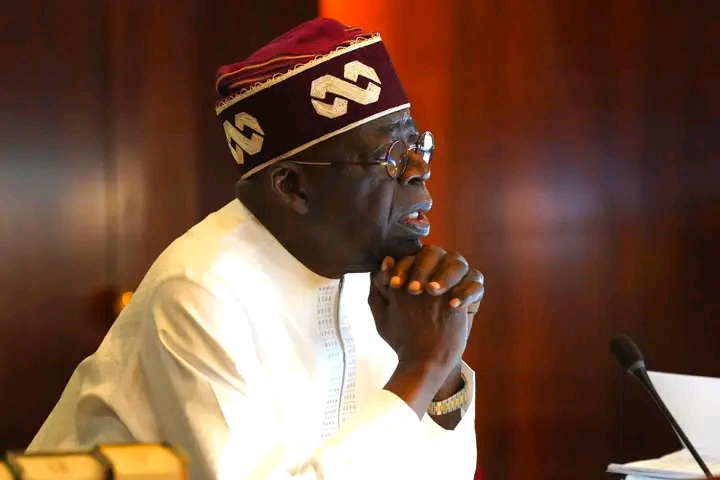
President Bola Ahmed Tinubu on Friday declared 2026 as Operation No Mercy, drawing a firm line against terrorism, banditry, kidnapping and all forms of violent crime, as he unveiled a tougher national security posture anchored on a new criminal justice drive.
The declaration was contained in a statement issued by the Special Adviser to the President on Information and Strategy, Bayo Onanuga, following the President’s presentation of the 2026 Appropriation Bill to a joint session of the National Assembly in Abuja.

President Tinubu said the Federal Government would “usher in a new era of criminal justice,” warning that the state would deal decisively with violent actors across the country.
He declared: “We will show no mercy to those who commit or support acts of terrorism, banditry, kidnapping for ransom and other violent crimes.”
He disclosed that his administration was resetting the national security framework with the introduction of a new national counterterrorism doctrine designed to change how the country confronts insecurity.
According to him, the doctrine is “anchored on unified command, intelligence gathering, community stability, and counter-insurgency.”
Under the revised security architecture, the President said any armed group operating outside state authority would be treated as a terrorist organisation.
“Any armed group or gun-wielding non-state actors operating outside state authority will be regarded as terrorists,” he said.
The President listed those to be targeted under Operation No Mercy to include “bandits, militias, armed gangs, armed robbers, violent cults, forest-based armed groups and foreign-linked mercenaries,” adding that the government would also pursue “those who perpetrate violence for political or sectarian ends, along with those who finance and facilitate their evil schemes.”
Beyond security, Tinubu said the 2026 Budget places strong emphasis on human capital development, with increased support for education and healthcare. He noted that access to tertiary education had expanded through the Nigerian Education Loan Fund, which has supported over 788,000 students across 229 institutions nationwide.
On healthcare, the President disclosed that spending in the sector accounts for six per cent of the total budget size, net of liabilities. He also confirmed fresh international support, stating that engagements with the United States government had opened access to “over 500 million United States dollars for health interventions across Nigeria,” with assurances that the funds would be applied transparently.
The President said the government would also prioritise infrastructure and food security, with agriculture positioned as a key driver of growth. He explained that the 2026 plan focuses on input financing, mechanisation, irrigation, storage, processing and agro-value chains to boost local production and farmers’ incomes.
Highlighting a major agricultural push, Tinubu said the Bank of Agriculture plans to expand cultivation and job creation in the coming year.
“Under the plan, Nigerian farmers will cultivate one million hectares, create hundreds of thousands of jobs, and prove that prosperity can rise through better use of our God-given land,” he said.
Tinubu reminded lawmakers and Nigerians that the true measure of any budget lies in delivery, not declarations. He said 2026 would be guided by a stronger revenue drive, targeted spending on projects citizens can feel, and firmer oversight of public funds.
He described the spending plan as one built to secure lives, strengthen livelihoods and restore confidence in the future, urging cooperation between the executive and legislature to make Operation Mercy a turning point in Nigeria’s fight against insecurity.
For advertising, promotions, news coverage, birthday wishes and situation reports, contact us at nationalparrotnews@gmail.com .