

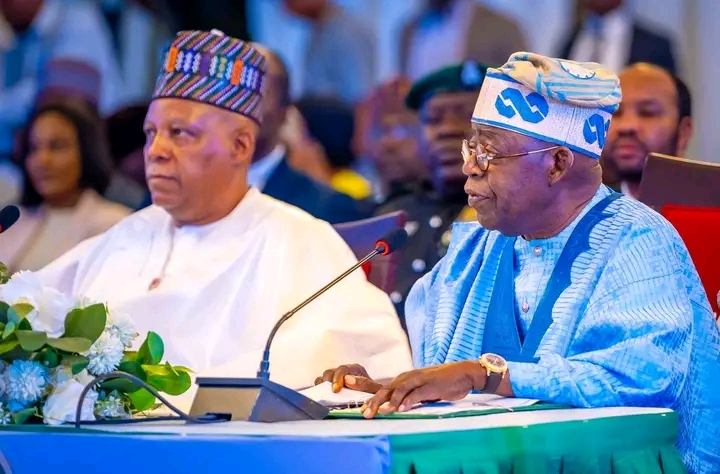
President Bola Tinubu has declared that Nigeria will overcome terrorism and banditry.
He described the threats of insecurity as unacceptable and alien to the nation’s values, while pledging renewed action to restore peace across troubled communities.

The declaration was contained in a statement issued on Monday by the Special Adviser to the President on Information and Strategy, Bayo Onanuga, following the opening of the Second National Economic Council (NEC) Conference at the State House Conference Centre, Abuja.
Addressing participants at the two-day meeting, the President said strengthening the nation’s security forces remains a top priority of his administration, stressing that insecurity has continued to weigh heavily on both citizens and the economy.
“I promise you here that I’ll play my part. Seven zones of mechanisation are coming. I promise Nigerians that this will be delivered, and I am here again to further find ways to strengthen our security forces and defeat terrorism.
“That, I promise you, is what has kept all of us sleepless at night, but I assure you we will win with determination and resilience. We will overcome this unacceptable terrorism and banditry. It’s not part of our culture. It’s foreign to us,” Tinubu said.
He described insecurity as a drag on economic progress and called for collective action to bring about quick solutions, while praising governors, particularly those of Borno, Katsina and Kaduna states, for doing “so much to defend our freedom, liberty and our commonwealth.”
Welcoming governors, ministers, federal lawmakers, development partners and private sector leaders to the conference, themed “Delivering Inclusive Growth and Sustainable National Development: The Renewed Hope National Development Plan 2026–2030,” the President said the gathering underscored shared responsibility for national advancement.
“I am pleased to address the second edition of the National Economic Council Conference at a critical moment in Nigeria’s development journey. NEC remains a cornerstone of fiscal federalism and economic governance in our country,” he said, while commending the council, chaired by Vice President Kashim Shettima, for sustaining policy coordination and strategic dialogue.
Reviewing the record of his administration, Tinubu said economic reforms introduced since he took office had helped steady the economy and rebuild confidence locally and internationally.
“I must say again at this juncture, the monetary policy that we have embarked on since the reforms has yielded positive results and gained recognition around the world,” he said, also commending the Central Bank of Nigeria under Governor Yemi Cardoso for restoring confidence in monetary management.
The President noted that state and local governments now receive higher and more predictable federal allocations, improving their ability to pay salaries, fund infrastructure, and provide social services. He added that priority has been given to transport, power supply, digital connectivity, housing and irrigation.
He also highlighted the expansion of social investment and human capital programmes aimed at vulnerable households, youths, women and small businesses, including community-level initiatives under the Renewed Hope Agenda.
“The Renewed Hope Ward Development Project further demonstrates our commitment to grassroots inclusion through a bottom-up approach to national development.
“These successes reflect strong collaboration among the federal and state governments, development partners and the private sector,” Tinubu said.
Explaining the Renewed Hope National Development Plan 2026–2030, the President said it marks the next phase of Nigeria’s development path, with focus on diversification, productivity, human capital, subnational competitiveness, private sector participation and climate resilience.
“Its success will depend largely on effective implementation at the state and local government levels, making NEC central to aligning national priorities with subnational realities.
“This Conference has reinforced collaboration, shared accountability and a focus on practical solutions and measurable outcomes.
“We must move decisively from declarations to implementation through data-driven decision-making, peer learning among states and innovative financing models,” he said.
Tinubu said while the challenges facing the country are significant, the moment also presents a rare opportunity, expressing optimism that outcomes of the conference would boost agricultural diversification, including dairy farming, livestock investment and ranching.