

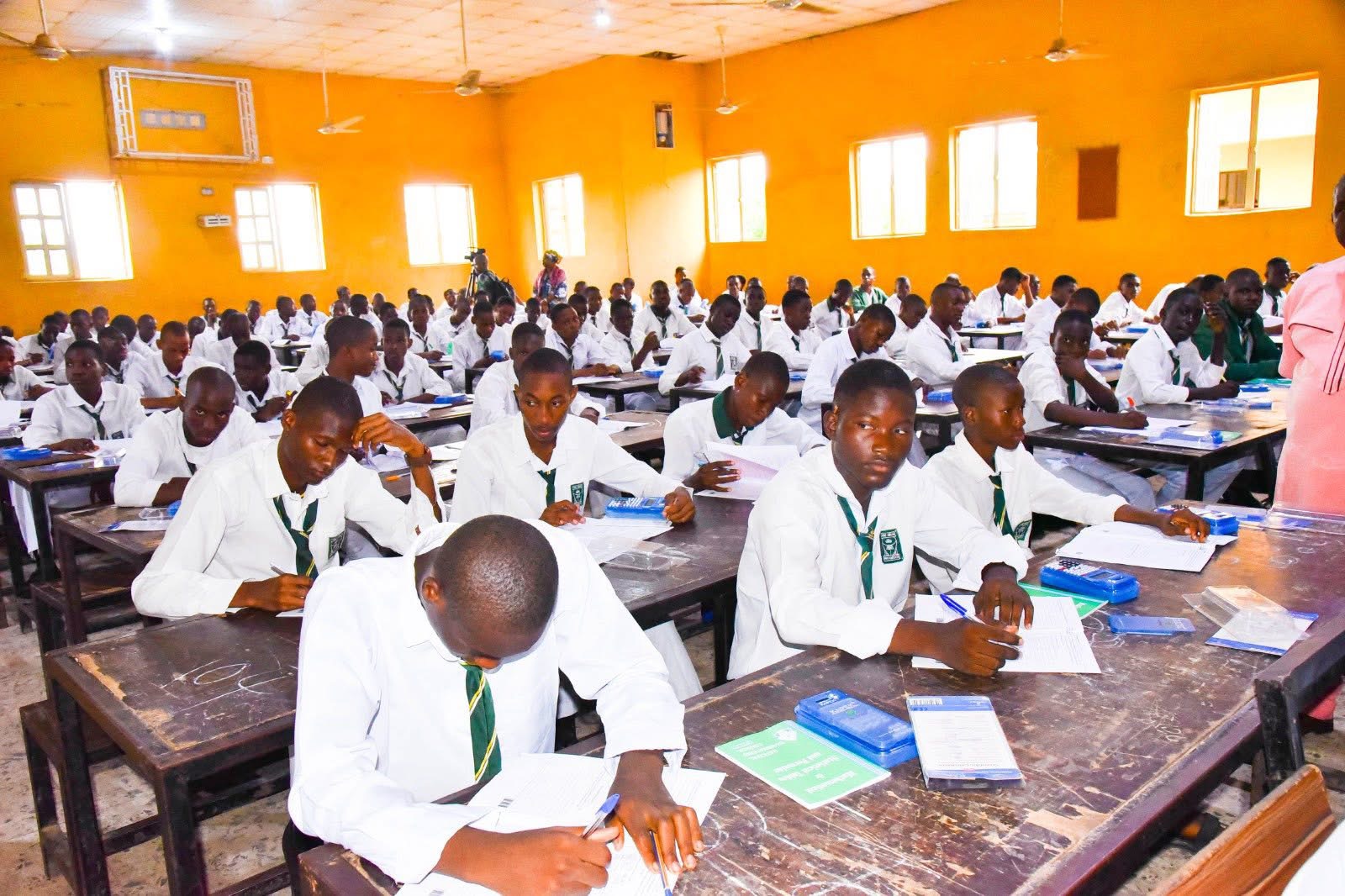
The Federal Government, yesterday, expressed satisfaction with the conduct of the ongoing 2026 West African Senior School Certificate Examination (WASSCE) in the country.
As contained in a statement issued by the Federal Ministry of Education, the expression followed a monitoring exercise which was led by the Minister of State for Education, Professor Suwaiba Sa’id Ahmad, at examination centres in Abuja.

Prof. Ahmad praised the successful introduction of the Computer-Based Test (CBT) in selected centres across the country.
During the inspection hours, the minister visited Government Secondary School, Garki, and Apo Boys Secondary School, where she assessed both CBT and conventional paper-based examination centres.
Prof. Ahmad said the exercise had so far been orderly and credible, noting that candidates displayed discipline, preparedness and confidence regardless of the examination format adopted at their centres.
She observed that students at CBT centres were able to navigate the digital platform without difficulty and reported smooth experiences throughout the examination process. She also noted that paper-based centres maintained proper supervision and organisation.
The minister disclosed that WAEC had conducted extensive pilot testing before introducing the CBT model on a wider scale. She added that backup power arrangements, including solar energy systems and generators, were provided to prevent disruptions during the examinations.
Reaffirming the Federal Government’s position on digital assessment, Ahmad said the transition would continue in phases, taking into account the level of infrastructure available in schools across the country.
The Head of National Office of WAEC in Nigeria, Mr. Patrick Dangut, revealed that 1,959,636 candidates from about 29,000 schools registered for the 2026 WASSCE, underscoring the scale of the examination exercise nationwide.
The government also assured stakeholders that the migration to a fully digital examination system would be carefully implemented to guarantee fairness, inclusiveness and reliability.
It stated that no candidate or part of the country would be left behind as reforms in the examination process continue.