

The Central Bank of Nigeria (CBN) has affirmed that the commemorative ₦100 note, the standard ₦100 note and every approved naira denomination remain legal tender across the country.
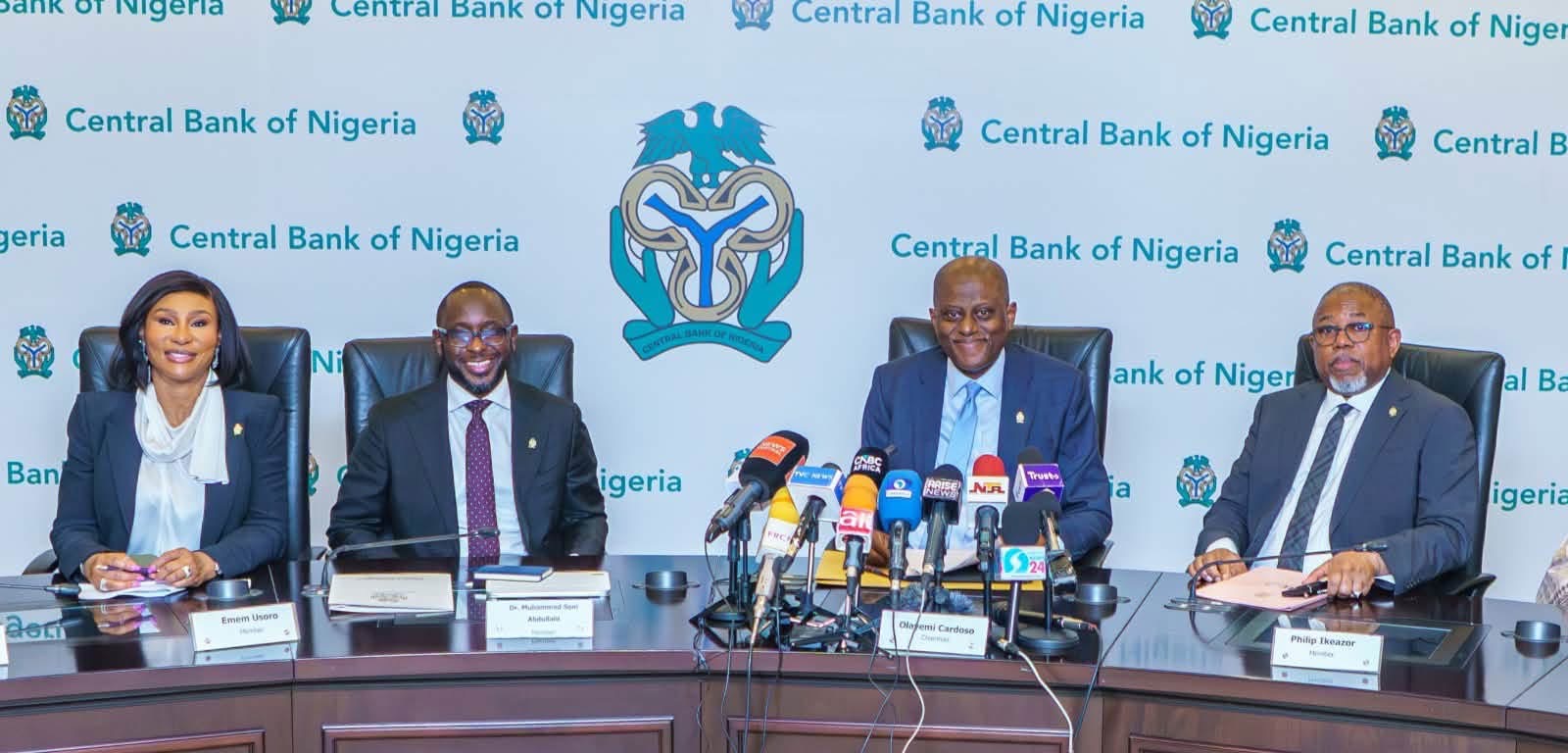
The clarification came in a statement issued after the 306th Monetary Policy Committee (MPC) meeting, where CBN Governor Olayemi Cardoso outlined the bank’s assessment of the economy and its policy direction.

Addressing developments in the payments ecosystem, Cardoso said the commemorative ₦100 note, the standard ₦100 note, and all approved naira denominations remain legal tender. He added that the future of payments is increasingly digital, with the CBN committed to building a secure, inclusive and modern payment ecosystem aligned with global best practices.
The governor said the apex bank would continue to pursue macroeconomic stability through coordinated, data-driven monetary policy. He noted that despite global uncertainties and renewed geopolitical tensions, Nigeria’s economy remains on a steady growth path, with output expected to stay strong in 2026, supported by improved crude oil production, expansionary Purchasing Managers’ Index (PMI) readings and the gains from ongoing reforms.
Cardoso said the Monetary Policy Committee remained focused on safeguarding price stability and the financial system while standing ready to introduce measures that would moderate inflation and return it to a single-digit path over the medium term.
He also welcomed the successful completion of the banking sector recapitalisation exercise, saying it had strengthened the resilience of the financial system. Speaking on the recent regulatory action involving 46 microfinance banks, Cardoso said the move addressed longstanding compliance and regulatory breaches, stressing that protecting depositors’ funds remains the CBN’s top priority.
On the foreign exchange market, the governor restated the bank’s commitment to a transparent, liquid and market-driven system based on willing buyer, willing seller principles. He said exchange rate movements would continue to reflect market fundamentals while ongoing reforms build confidence, improve competitiveness and support long-term economic stability.
Cardoso also highlighted the introduction of the Nigeria Overnight Financing Rate (NOFR), describing it as a major step toward greater transparency because it reflects actual overnight secured funding transactions between banks. He said the benchmark would complement the Monetary Policy Rate (MPR), improve monetary policy transmission and support Nigeria’s inflation-targeting framework.
Speaking on the CBN’s recognition as the 2026 Central Banking Award winner, Cardoso said, “the achievement” reflects “the dedication, professionalism and collective efforts of the CBN’s staff and management.” He also commended the Nigerian media for its support, noting that the recognition reinforces the responsibility carried by central banks because their decisions affect millions of people.
He added that Nigeria’s reforms are receiving global recognition because they are strengthening economic stability, boosting investor confidence and laying the foundation for sustainable economic growth.