

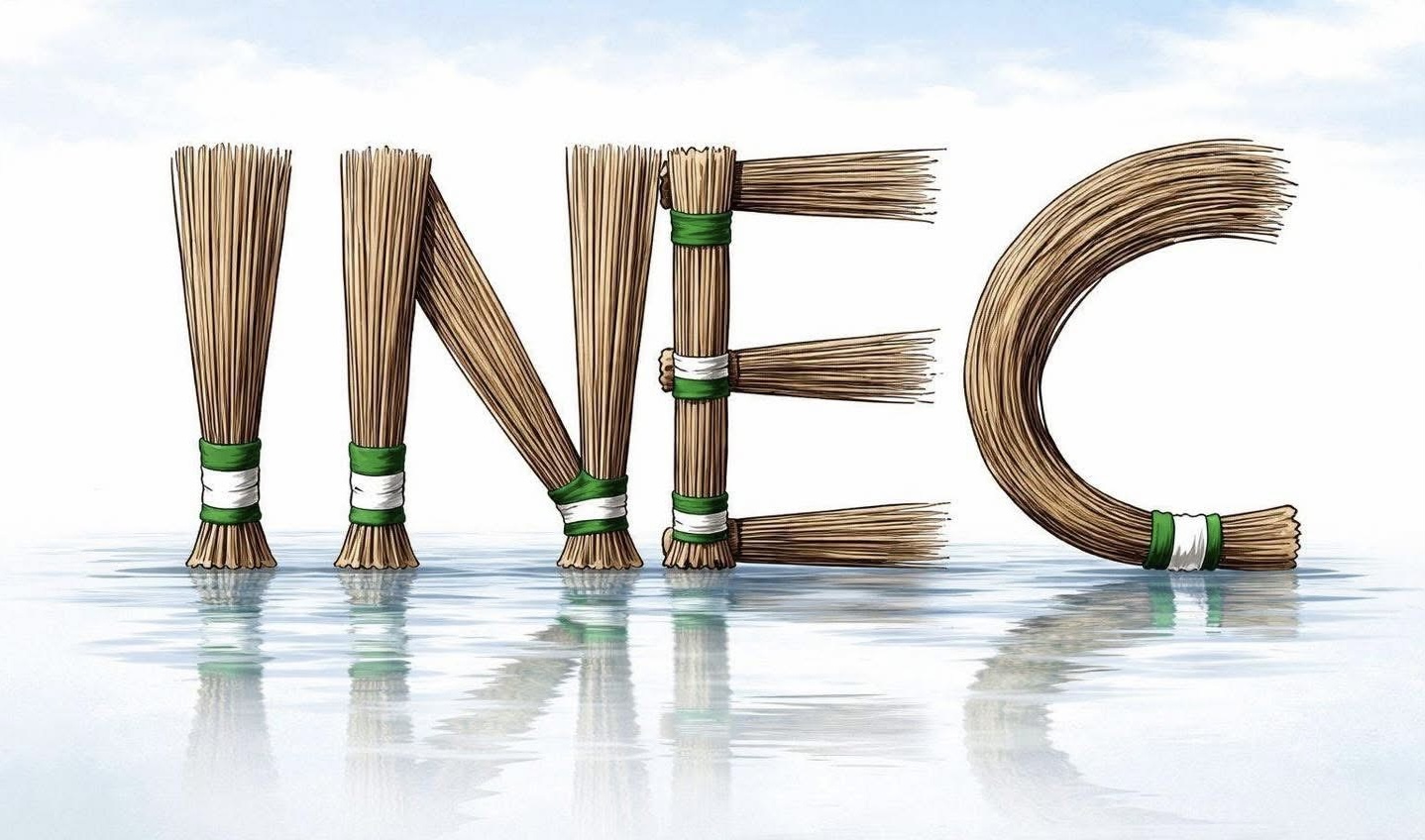
Nigeria’s voter register has crossed 103 million as INEC prepares to begin nationwide collection of Permanent Voter Cards on Friday, October 9.
The disclosure was made by INEC Chairman, Prof. Joash Amupitan, SAN, during a strategic workshop for media executives in Abuja on Monday.

Amupitan said more than 10.6 million Nigerians applied during the three-phase Continuous Voter Registration exercise, while the public display of the Preliminary Register for claims and objections had been completed.
He also disclosed that INEC had concluded the final Automated Biometric Identification System cleanup of the voter register ahead of the 2027 general elections.
The workshop, organised by INEC in collaboration with Development Alternatives Incorporated and the Nigerian Guild of Editors, was held at BON Hotel Octagon, Jahi District, Abuja, under the theme, “Strengthening Democracy Through Partnership Among Editors, Civil Society and Electoral Institutions.”
Amupitan urged eligible Nigerians to participate in the PVC collection exercise, stressing its importance as preparations intensify for the 2027 elections.
He said INEC would continue improving the Bimodal Voter Accreditation System and INEC Result Viewing Portal to ensure valid votes are properly accredited, recorded and made accessible to citizens.
The INEC chairman also placed public confidence at the centre of electoral credibility, saying effective administration alone could not guarantee trust in elections.
“The ultimate arbiter of electoral integrity is public trust,” Amupitan said.
He called for closer cooperation among INEC, editors, civil society organisations and other stakeholders, saying such engagement would help address operational challenges and reduce information gaps that could fuel misinformation.
Amupitan also urged news organisations to establish digital fact-verification desks, while pledging direct access for editors to verify field incidents, logistics and security developments in real time.
He proposed a sustained editorial feedback mechanism between INEC and the Nigerian Guild of Editors to monitor preparations and address emerging concerns throughout the 2027 election cycle.
Earlier, President of the Nigerian Guild of Editors, Eze Anaba, described the workshop as timely, given the country’s approach to another general election.
Anaba said elections involved more than voting, stressing that citizens must have confidence that their votes would count and that electoral bodies would operate fairly and professionally.
He urged editors to uphold accuracy, fairness, balance and public interest in election coverage while seeking credible and timely information from INEC.
Director of INEC’s Voter Education and Publicity Department, Victoria Eta-Messi, identified misinformation and disinformation as major contributors to declining citizen participation.
She called on media organisations to help deliver accurate information to voters, particularly with PVC collection set to begin.
DAI Team Leader, Rudolf Elbling, said credible elections depended on sound electoral administration as well as professional, ethical and fact-based journalism.
Elbling identified electoral integrity, election technology, safety of journalists and voters, and information disorder among major challenges facing election reporting ahead of 2027.
Executive Director of Centre for Media and Society, Dr Akin Akingbulu, said Nigeria was approaching a critical phase in its democratic development as preparations for 2027 elections gathered pace.
He noted that electoral information was already shaping public discussions across traditional and digital media platforms.
Akingbulu urged editors to treat verification as a core responsibility, particularly amid the growing threat posed by deepfakes and unofficial election results.
Executive Director of International Press Centre, Lanre Arogundade, said electoral contests extended beyond campaigns and voting to include political interests, information battles and public perceptions of electoral actors.
He warned that media ownership and commercial interests could affect newsroom independence during election coverage.
Opening the strategic session, INEC National Commissioner and Chairman of the Information and Voter Education Committee, Mohammed Haruna, said the Commission had conducted several elections under its current leadership, including the Anambra governorship election, FCT Area Council elections, Ekiti and Osun governorship elections, alongside legislative bye-elections.
Haruna also said INEC had monitored primaries conducted by 22 political parties for the 2027 elections, including nominations linked to newly created court-ordered constituencies.
He said election management had recorded progressive improvements, describing the Osun governorship election as widely regarded as its most successful exercise so far.
Chief Press Secretary to the INEC chairman, Adedayo Oketola, said the workshop was designed around three broad objectives: rebuilding institutional trust through open communication, strengthening fact verification, and promoting shared responsibility among media, civil society and electoral bodies.
He said INEC wanted to establish round-the-clock verification channels with newsrooms to enable journalists confirm information before publication.
Technical sessions at the workshop examined electoral reporting, enforcement of electoral laws, election technology, citizenship, inclusive governance, electoral safety, prosecution of electoral offences and misinformation.
The sessions were facilitated by Dr Tony Onyima, Prof Lai Olurode, Lobe Hvass, Lanre Idowu and Lanre Arogundade.