
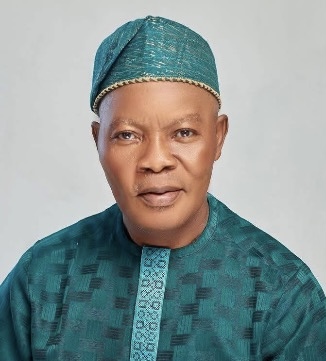
Road construction, healthcare facility reconstruction, youth empowerment and community security have featured prominently in Peter Ajose’s first year as chairman of Olorunda LCDA.
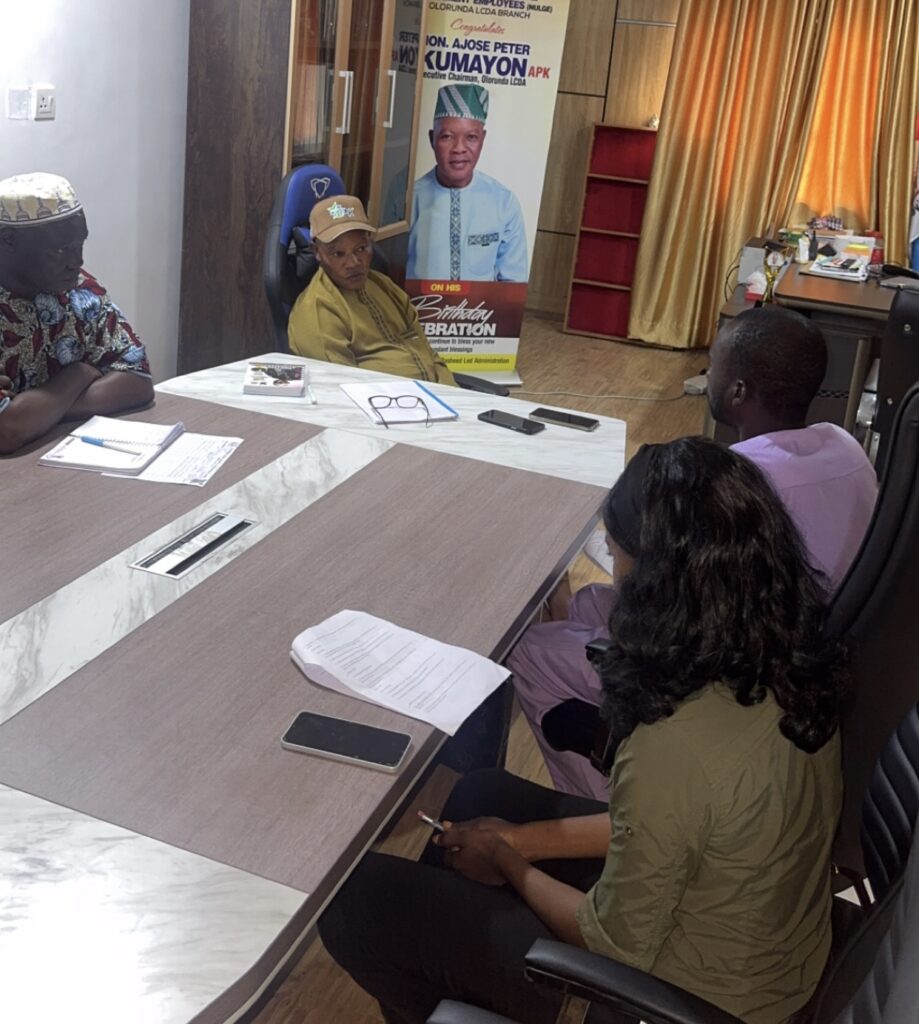
Ajose highlighted the projects and programmes in an interview marking his first year in office, where he also spoke on community consultations, revenue generation, leadership and his experience in public service.
Ajose made this known in an interview marking his first year as Executive Chairman, where he also spoke on community consultations, revenue generation, leadership and his experience in public service.
The chairman described the period as “quite interesting, challenging and quite fulfilling”, saying his experience in office had broadened his understanding of leadership and altered some of his expectations about running a local council.
“It is beyond expectation. When you are outside the house, your expectations are very wide and numerous. But by the time you assume office, you have a different perspective from what you had before you came in.”
Ajose identified road infrastructure as one of the major areas his administration had prioritised, describing it as a direct response to the needs of residents.
“The most germane one on the ground is the provision of road infrastructure to the people,” the chairman revealed.
He specifically mentioned the Mowo-Age Mowo Road among the road projects being undertaken by the administration, saying residents had begun to appreciate the scale of the projects even though some were still ongoing.
“Despite the fact that it is still ongoing, the residents can see it. Having seen it, they are overwhelmed that from a local government, such a magnitude of projects could be embarked upon,” Ajose disclosed.
On electrification, the chairman said some of the projects might not produce immediate results but would benefit more residents once completed.
“These are projects that one has to impact. Immediately, the effect may not be seen, but we believe that by the time they are completed, a larger percentage of our people will benefit from them,” he added.
Ajose emphasized that consultations with residents and community stakeholders also influenced the projects undertaken by his administration.
He explained that while the administration entered office with its own plans, it created room for market men, artisans, traditional rulers, community leaders and other stakeholders to identify pressing needs.
“When this administration was coming in, we had our own templates. But that notwithstanding, we still allowed them to come forward with their own needs,” he noted.
He said the process also involved assessing the needs of residents across various communities, helping the council determine projects based on the findings from the different areas.
According to the chairman, the assessments led to changes in the scope of some projects, including two town halls and primary healthcare facilities initially scheduled for renovation.
He said the condition of the Morogbo Primary Healthcare Centre was found to be too poor for renovation to provide a lasting solution, saying the administration therefore chose to pull down the facility for reconstruction.
“One of them was even one of the PHCs that had been in existence for quite some time. It was meant to be renovated. But when we got there, we realised that the structure was very defective. For us to have a lasting legacy, we decided to pull it down entirely,” Ajose explained.
He added that while the Morogbo PHC was pulled down for reconstruction, the Yeponawa PHC was renovated, while the Ilado PHC was being powered with solar energy and furnished with modern equipment.
On revenue generation, Ajose said his administration discovered gaps in the council’s database and began putting a data-generation system in place to provide better information for planning.
According to him, “When we looked into the database, there was nothing to show for it. So, invariably, we decided to put a data-generation mechanism in place.”
He said the exercise would eventually help the council understand its internally generated revenue potential and make better projections.
“In the immediate term, it may not be feasible, but we are very optimistic that in the long run, the data generated will give us a focus and an idea of what could be expected in terms of IGR,” the chairman said.
In terms of youth support, the executive chairman noted that his administration had focused on the development of young people through training programmes designed to equip them with practical skills.
He disclosed that the council was also looking towards establishing a youth centre, which he said would provide young people with opportunities for skills development and productive engagement.
“The youth centre may not be felt immediately, but by the time it is completed, we believe that it will be an avenue for the youths to engage themselves in meaningful skills and become self-reliant in the future,” Ajose disclosed.
On women’s empowerment, the chairman said women had received considerable attention through skills acquisition programmes and distribution of materials to support their businesses.
He said the council had also distributed various items to women to strengthen their trades and businesses.
“Most of our programmes have been, I would say, almost 45 per cent of our supportive roles have been concentrated on women.
“We have had cause, on a number of occasions, to distribute various items that will make them self-dependent and self-reliant in their fields,” Ajose added.
Ajose said community security was another area his administration had addressed, revealing that the council established the JTF while other local security groups continued to collaborate with the administration to complement the efforts of conventional security agencies.
He stated that the groups had contributed to security efforts because of their familiarity with the communities.
“When the administration came into place, we set up the JTF. We engaged them. The total number we engaged from the onset is about 31, and we are still looking forward to getting more.
“The communities within Olorunda have been able to feel their impact because they have been playing a supporting role to complement the conventional security forces we have within Olorunda,” the council chairman said.
The chairman also spoke about criticism of his administration, describing it as an unavoidable part of public leadership.
According to him, “Criticism is part of governance because we don’t expect everybody to like you, to like your administration or even to like what you are doing.”
Ajose said people who criticise the government should not automatically be regarded as enemies, stressing that their views could help improve governance.
“They are not enemies of the government. Whatever they may be saying is equally part of what will be needed to give a better result that will benefit the generality of the people,” he explained.
Ajose disclosed that his previous experience as a vice chairman of Badagry Local Government and more than 25 years in the civil service had prepared him for the demands of leadership and human management.
“Those experiences within the period of being vice chairman and that of being a civil servant have been able to equip me to an extent that, no matter the challenges or difficulties you may face when it comes to human management, there is no amount of challenges that should debar you or make you lose focus on what you are meant to do,” he said.
Looking ahead to the 2027 general election, Ajose urged Nigerians to remain hopeful and continue supporting President Bola Tinubu’s administration and the APC.
“The message to the masses is very simple. We should keep hope and continue believing in the administration of the present government, the government of the APC,” he said.
He cited the disappearance of prolonged fuel queues following the removal of fuel subsidy as one development he considered significant.
While acknowledging the difficulties associated with the country’s economic changes, Ajose said the process would take time before its full effects could be felt.
“It is a gradual process, and we are beginning to see the effects.
“Asiwaju is really trying. My appeal to our people is to keep hope and continue believing in the administration,” the chairman added.
He further expressed optimism about the country’s future, saying, “There is a better tomorrow in Nigeria and in Lagos State as a whole.”